

Early Signs of Autism in Toddlers
Early signs of autism in toddlers most parents notice first. What to write down, when to ask for a developmental screen, and what comes next.


Most parents do not arrive at an autism evaluation because of one big moment. They arrive because of a slow stack of small things: the way their toddler stopped waving back, the sound of their own name not landing, the third birthday party that ended in a meltdown nobody else’s child seemed to have.
If any of that feels familiar, here is a calm look at what tends to come up first, and what to do with it.
Communication cues, before words
Long before vocabulary, kids develop a back-and-forth rhythm with the people who love them. Common things parents notice:
- Limited eye contact during feeding, play, or shared books
- Not responding to their name by 12 months, even with hearing intact
- Few gestures like pointing, waving, or showing a toy to share
- Single words but no two-word phrases by around 24 months
- A sudden pause or loss of words or skills that were already there
None of these on their own mean autism. Together, in a pattern, they are worth a conversation with your pediatrician.
Play and interest patterns
Play is one of the clearest windows into how a young child is wired:
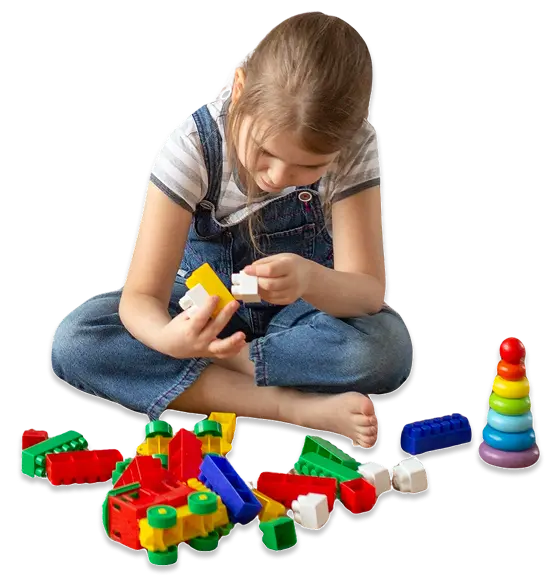
- Lining up toys instead of using them in pretend
- Strong preference for the same routine, the same show, the same plate
- Intense focus on parts of objects (wheels, switches, fans)
- Trouble with turn-taking, even with a familiar adult
- Limited “joint attention,” meaning looking at a thing, then at you, then back at the thing
Again, these can show up in any toddler. The question is intensity and frequency.
Sensory and regulation
Many autistic kids feel the world more loudly than the rest of us:
- Big reactions to ordinary sounds (vacuums, hand dryers, applause)
- Strong food preferences tied to texture or color
- Seeking pressure, spinning, jumping, or the same self-soothing motion
- Trouble settling in unfamiliar rooms or with new caregivers
Sensory needs are not “bad behavior.” They are information about what your child’s nervous system finds easy or hard.
What to do next, in order
- Write it down. A short, dated list of what you are seeing helps the pediatrician far more than trying to remember in the moment.
- Ask for a developmental screen. The MCHAT-R is the standard one, free, and takes a few minutes.
- Request a referral to a developmental pediatrician, neurologist, or autism evaluation team if the screen flags concerns.
- Start early intervention through your state’s program while the formal evaluation is being scheduled. You do not need a diagnosis to begin.
- Skip the panic Googling. A diagnosis is a roadmap, and the earlier you get one, the more options open up.
Why early matters
The first few years of life are when the brain is most open to learning new patterns. Early intervention does not “cure” autism, and it should not try to. What it does is help children build communication, regulation, and skill earlier, which makes the rest of childhood gentler for everyone.
If you are reading this with that quiet “hm” feeling in your chest, trust it. We are happy to talk through what you are seeing and what next steps might look like, with no pressure either way.

Want to talk it through?
A 20-MINUTE CALL CAN ANSWER MOST OF IT.
Free benefits check, plain-English answers, no pressure to commit. Available across New Jersey, Maryland, and Delaware.